


A wine-tasting adventure on the Mosel and Rhine
By Frank Whitman
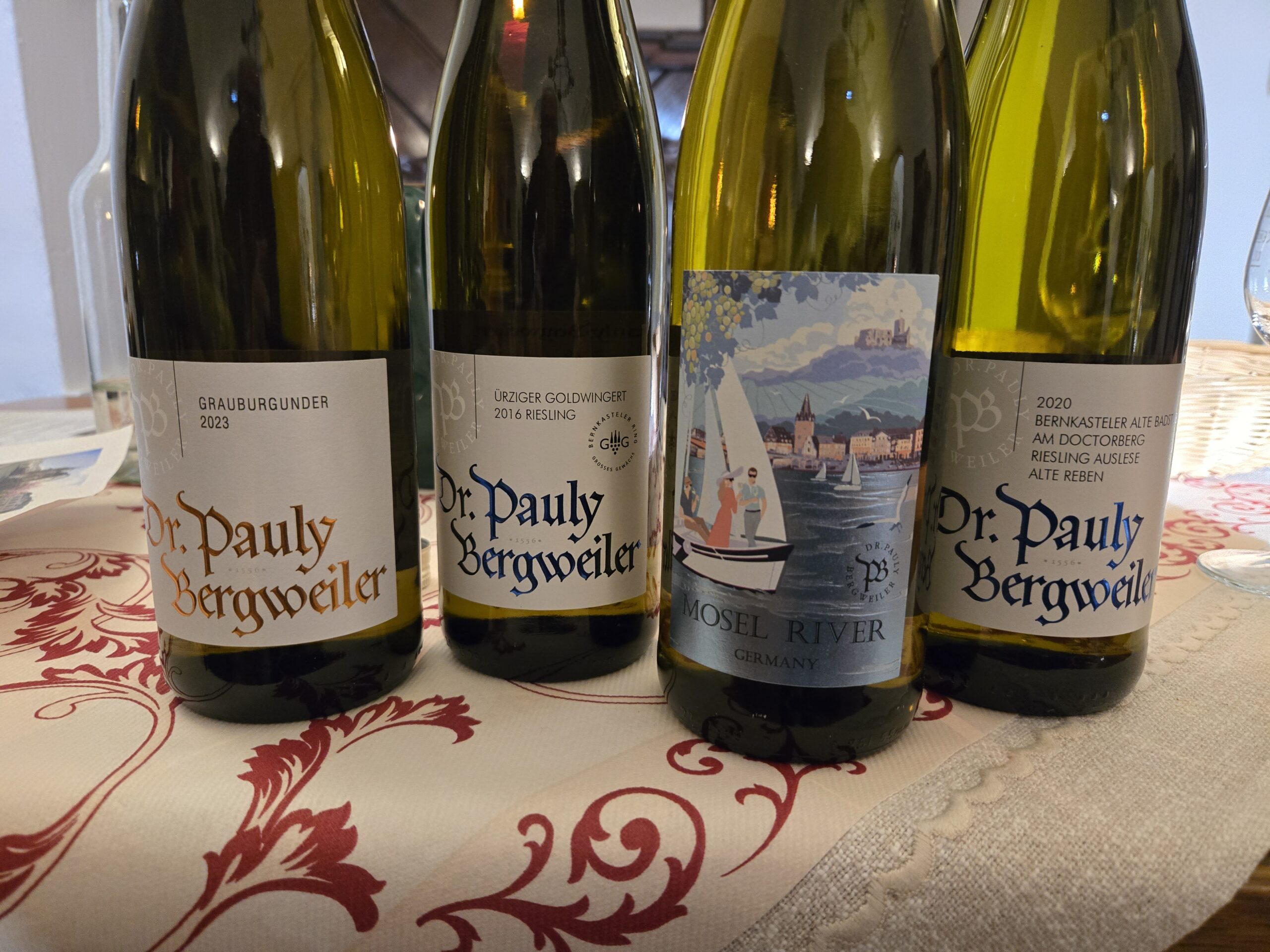
Bernkastle Wines
The banks of the Mosel and Rhine rivers in Germany are the sites of some of the most valued vineyards and sought-after wines in the world. Many of the steep, hand-farmed hillsides have been producing wines since Roman times. But the wines are little-understood and often passed over by the majority of American wine drinkers.
We boarded our ship in Trier for a German wine-country voyage down the Mosel and then up the Rhine to Switzerland. Passing by spectacularly steep vineyards, castles – both ruined and restored – the whole region is steeped in history. Yes, it was a Viking River cruise, and very nice indeed!
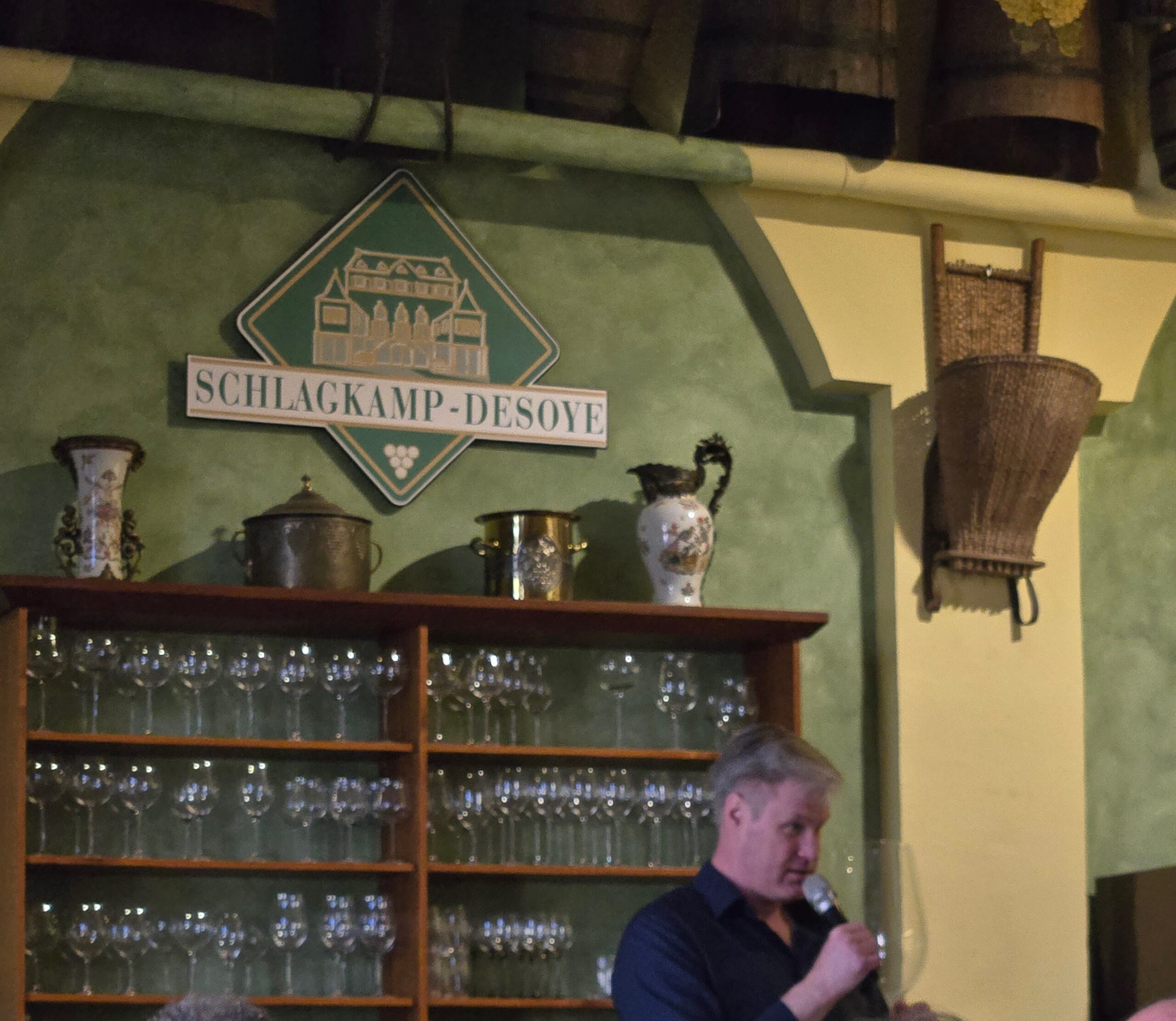
Schlagkamp-Desoye
Wine was not the focus of the cruise, but there was plenty anyway.
Riesling is the big-deal grape across the three regions we visited. It is cultivated around the world with notable results, but here with the cool climate and slate soils along the rivers, it excels.
Mention German Riesling and the response is usually, “I don’t like sweet wines.” That’s most likely based on inexpensive, mass-market wines that can, in fact, be too sweet. In the early days of the wine boom, there was a lot of wine like that (Liebfraumilch and Moselblümchen for example) that gave the wrong impression.
Many Rieslings are dry, with delightful fruit-forward flavors and a crisp food-friendly profile. And yes, some have residual sugar; but in the best wines that sweetness is balanced by a sharp, refreshing acidity.
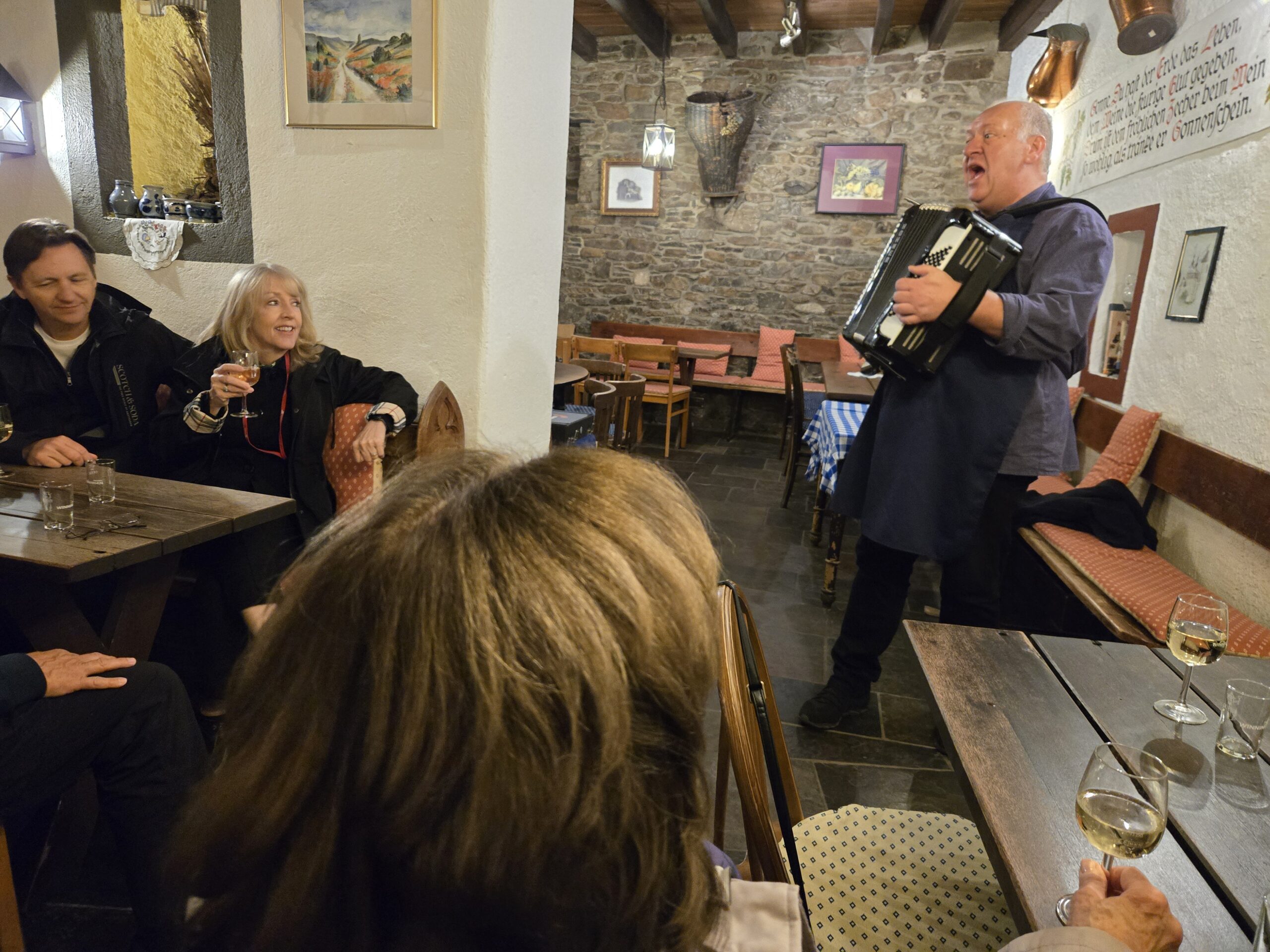
Jolly Weinstube music
Look for “feinherb” on the label, for a balanced wine. It’s the difference between a sticky-sweet popsicle and a refreshing sweet-tart peach. Please note that I said the best wines, not the most expensive. There are pricey bottles from the region but plenty of fine wines at everyday prices.
Our wine adventure began at Bernkastel-Kues, a charming and ancient wine village on the Mosel. At the family-owned Dr. Pauly Bergweiler winery, award-winning wines are made from 15 different steep-vineyard sites along the Mosel. Our group met in their ancient cellars to taste a range of delicate, mineral-driven wines including Rieslings ranging from bone dry to Auslese sweet.
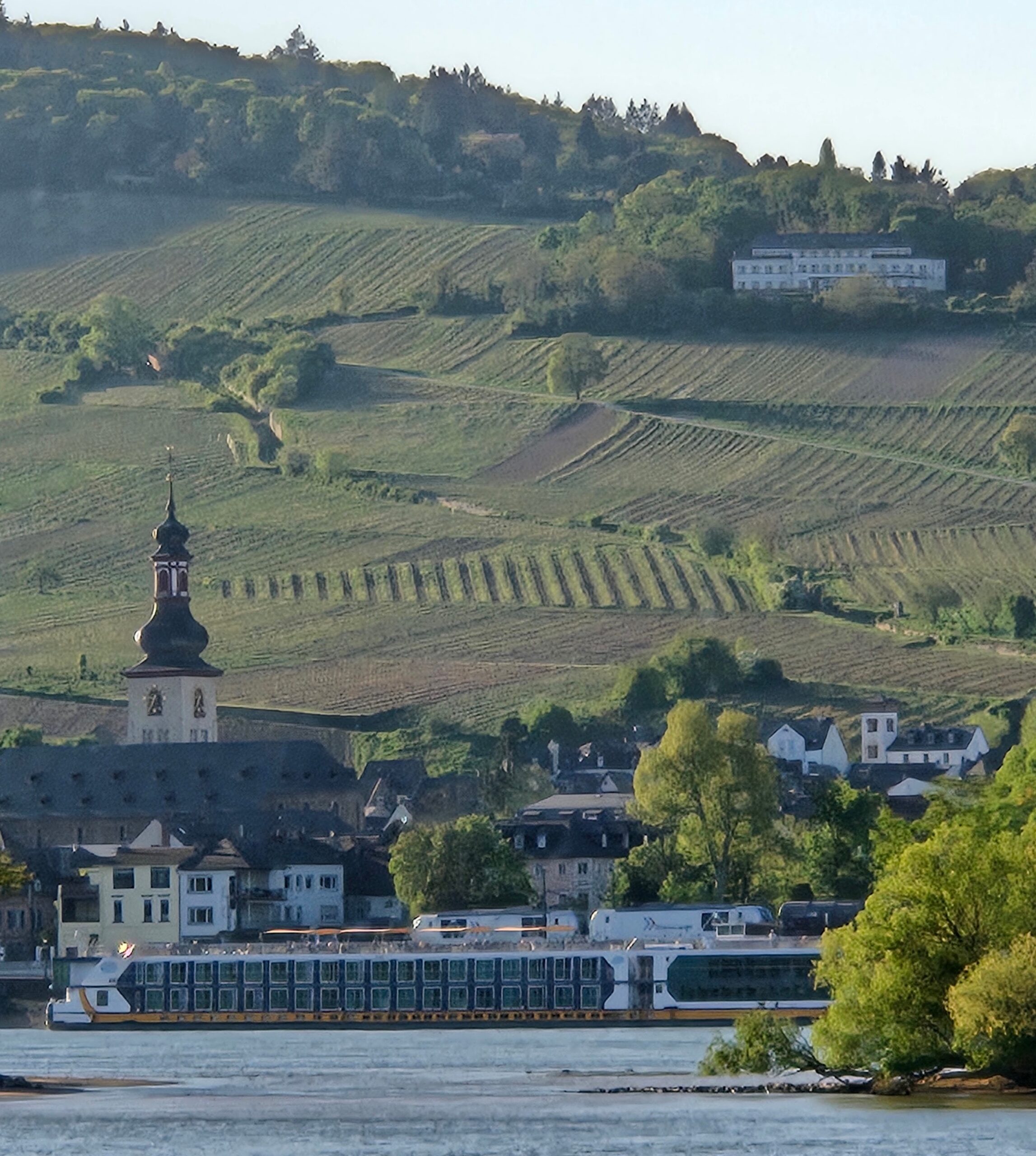
Schloss Johannesburg
The Schlagkamp-Desoye winery, up river from Cochem, is a family operation. Owner Andreas Schlagkamp is the 11th generation to make wines here. During the entertaining tasting, his daughter helped out and he hinted broadly that she should be the 12th. He’s an innovator, blending the harvest from hillside and valley floor for delicious everyday wines, experimenting with new grape varieties like Elbling (we loved it) while continuing to produce premium steep-slope Rieslings.
Our last stop on the Mosel was a hugely entertaining visit to a local weinstube. After an evening tour of the small town of Winningen we dropped into a cozy wine bar to be serenaded by a jolly accordion player (who is also the local church organist.) He cheerfully led us through traditional drinking songs while we sampled the hosts’ Rieslings. This small town has roughly 40 wine 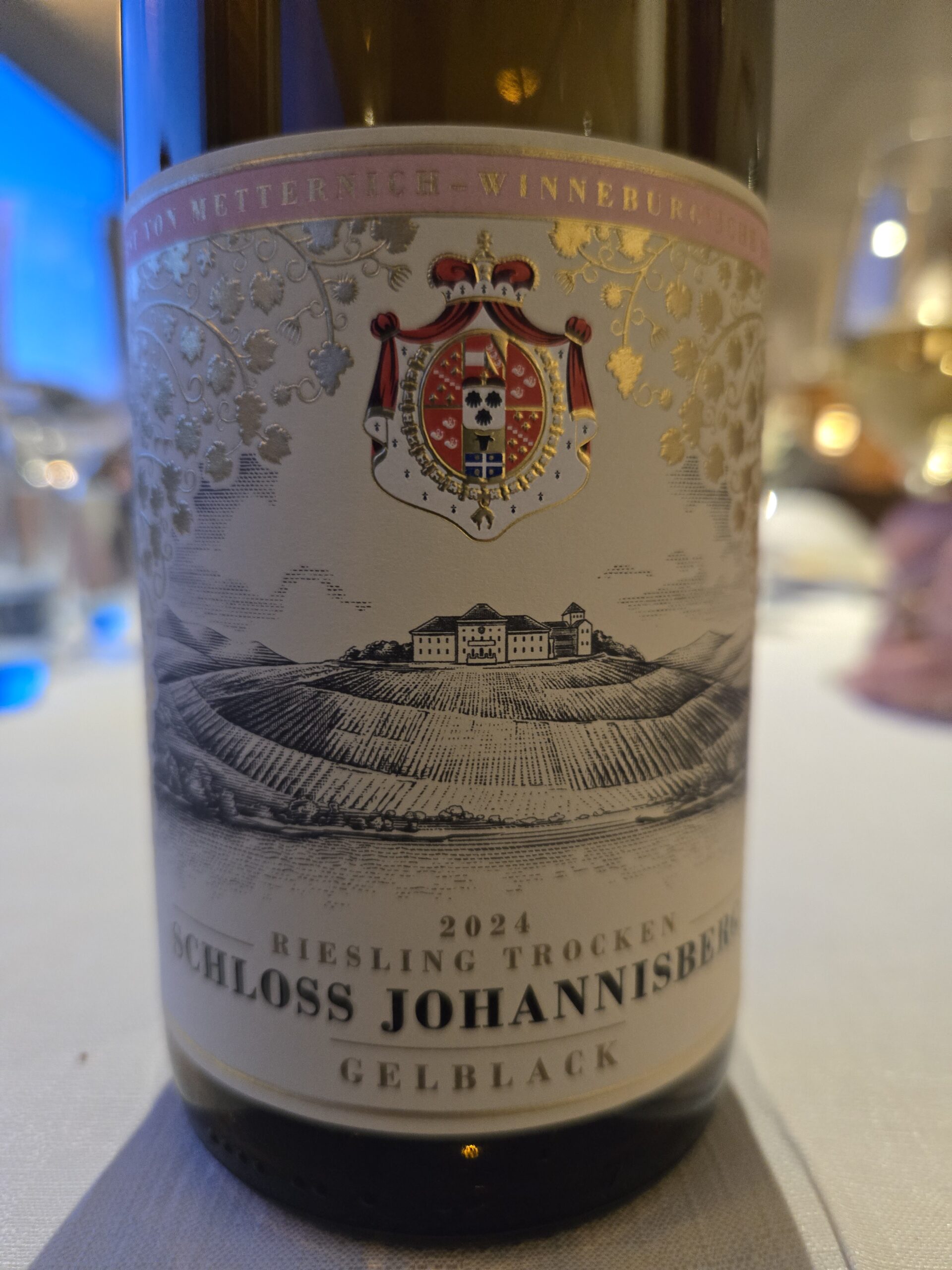 producers, small operations with local vineyards that are typical of much of the region’s output. You have to visit to enjoy wines like these; they’ll never come to the U.S.
On the way to Mainz, we cruised through the famous UNESCO designated world heritage stretch of the middle Rhine, populated by countless castles and some of the world’s finest vineyards. No wine stops here, but we did pass the legendary Schloss Johannisberg. Perched on a hillside overlooking the river, top-notch wine has been made here since 817. Fortunately, their wine was available on the ship – the dry Riesling, outstanding.
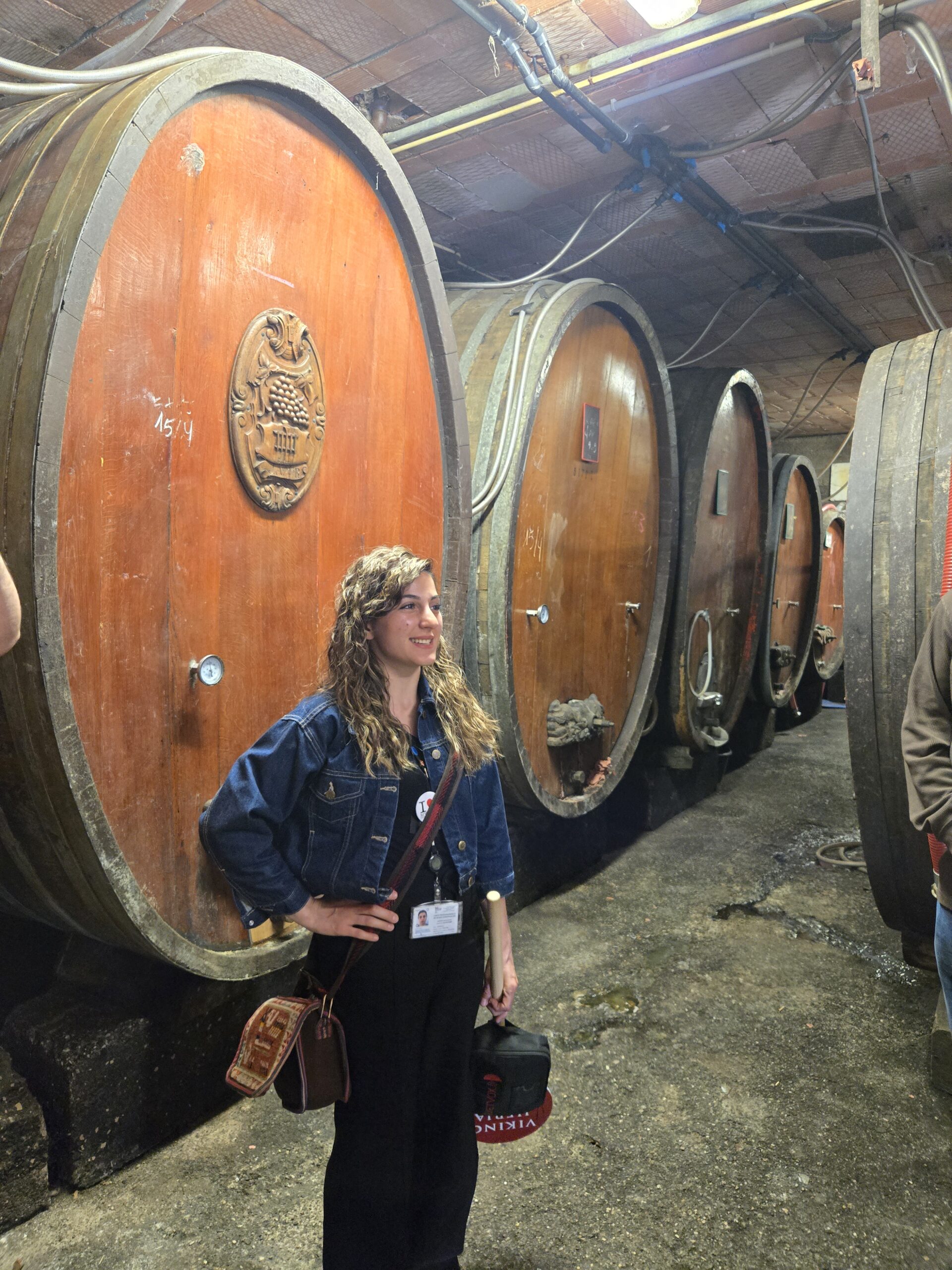
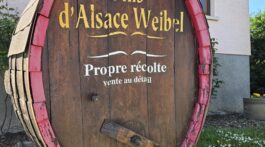
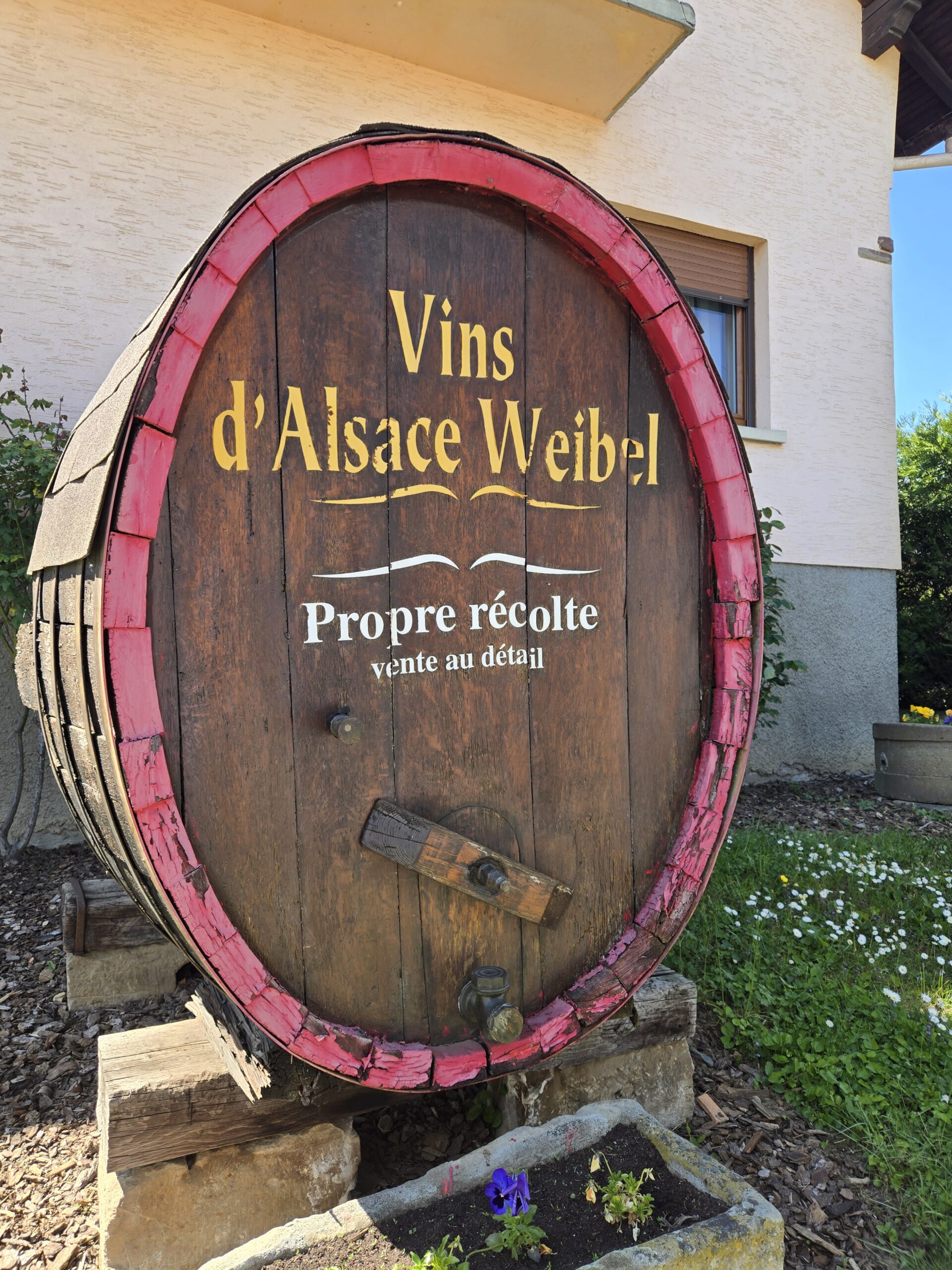
Ancient Barrels at Weibel
Strasbourg is the gateway to Alsace, another remarkable and historic wine region along the Rhine. Riesling is the flagship grape here too, but made in a bone-dry, full-bodied style vastly different from the fruit-driven, sometimes-sweetish wines of the Mosel and Rhine.
Outside of the city we drove through the California-like valley to Weibel, a small family winery, (this one going for only 5 generations), near the medieval town of Obernai. Here we tasted a sparkling wine as well as the trinity of Alsace grapes: Riesling, Pinot Gris, and Gewürztraminer. Sparkling wines are much more common in Europe, offered by the glass in a server’s litany of, “Red, white, or sparkling?” Alsatian wines are delicious, and the countryside is beautiful.
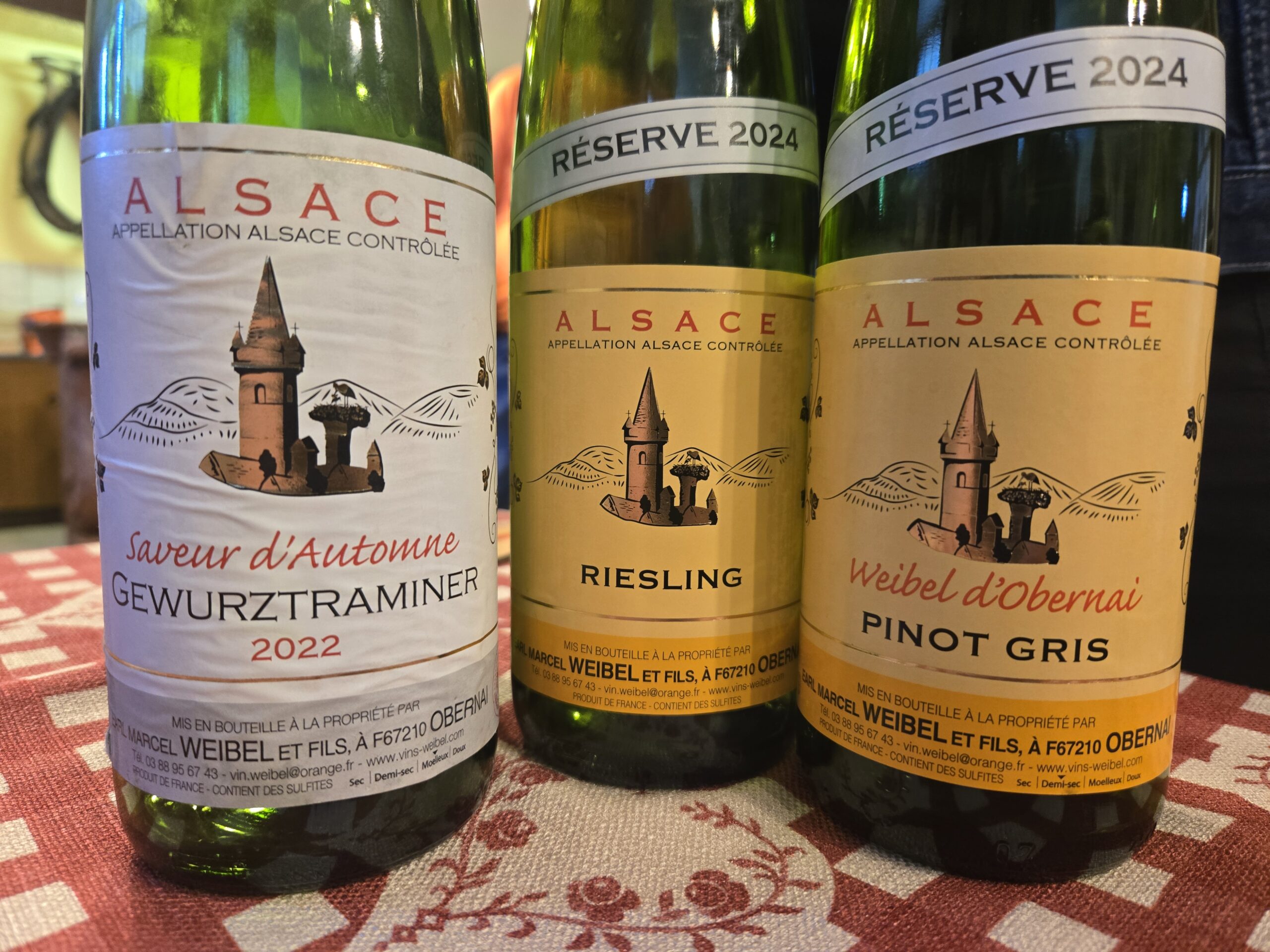 Our four tastings each showcased a different region, unique wine styles, and a surprising diversity. But wine is an everyday thing here, so popular that we even saw a wine vending-machine under an ancient arch in the city of Cochem. ID required, but a convenience for after hours wine emergencies.
When we ate ashore we made a point of asking for local wines and were never disappointed. Our wine journey started with Champagne at lunch in Reims, the city at the heart of the Champagne region. Our final glass, a Raüschling, was at lunch in Zurich – memorable bookends to our wine journey.
Unfortunately, most of the small-producer wines we tasted don’t come to the United States. You’ll just have to visit to taste them.
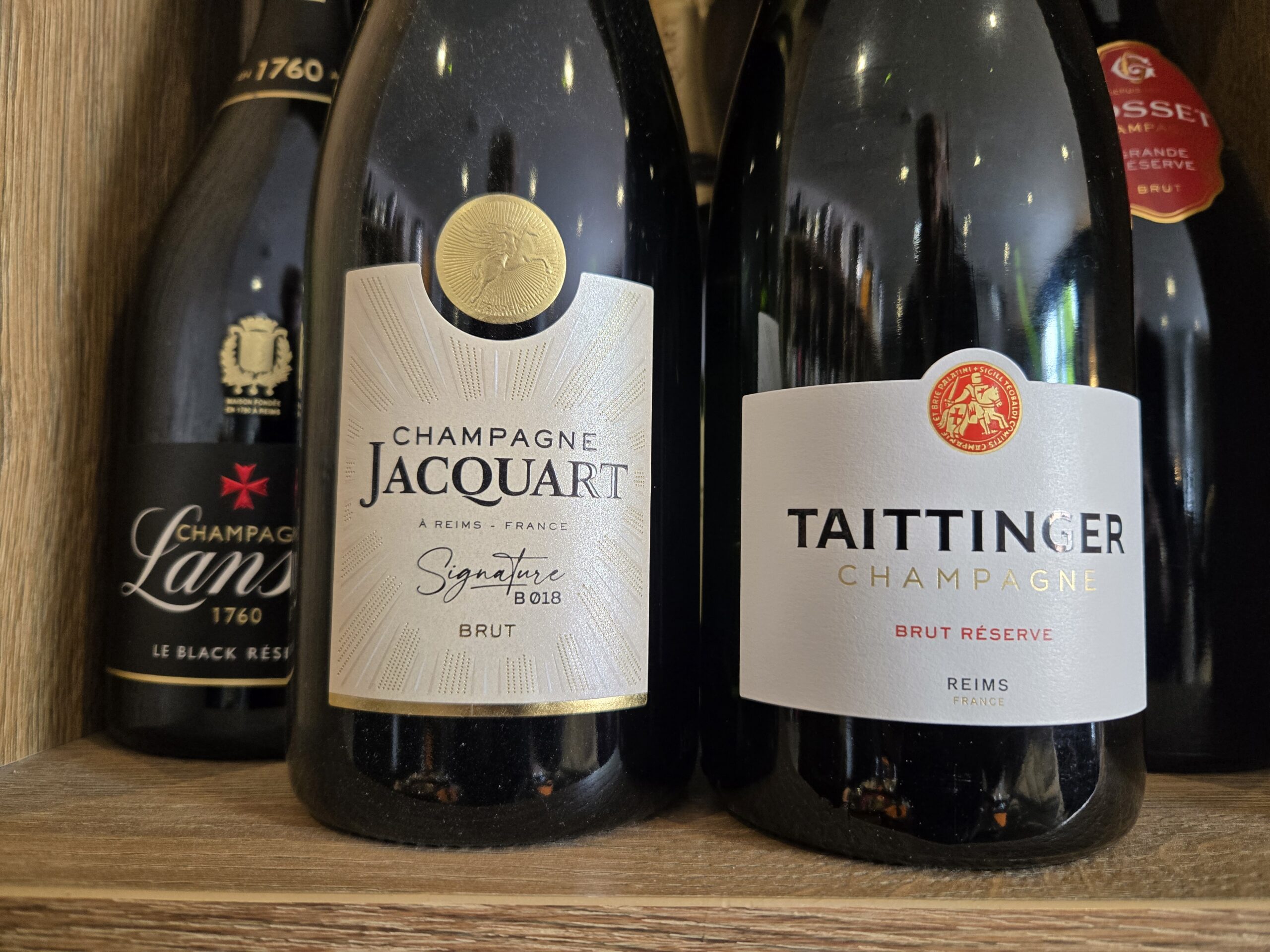
Champagne at lunch in Reims
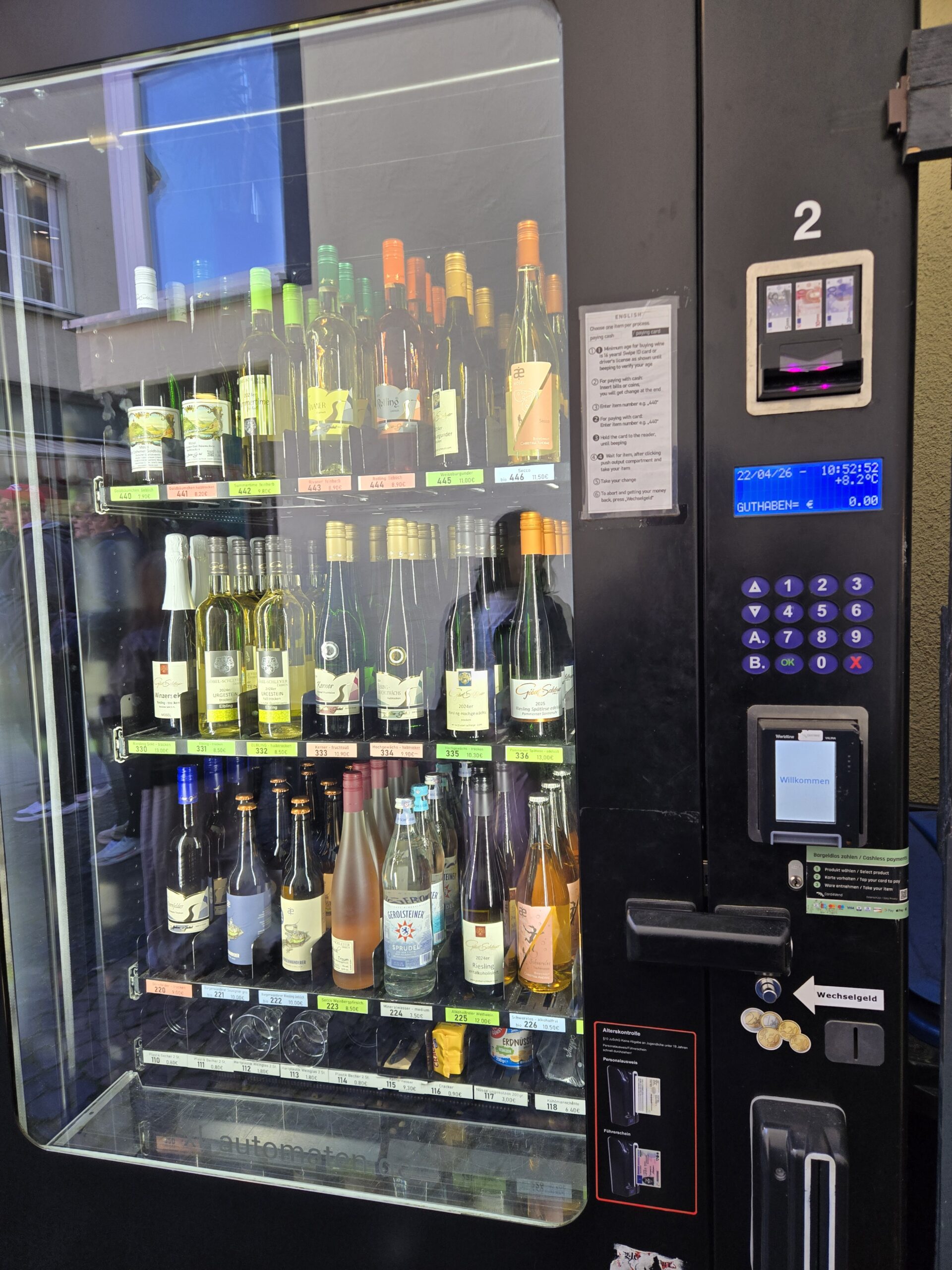
Wine vending machine



Great & informative article — Great trip.